Taking a Power Bank on a Plane This Christmas: The 2026 Rules
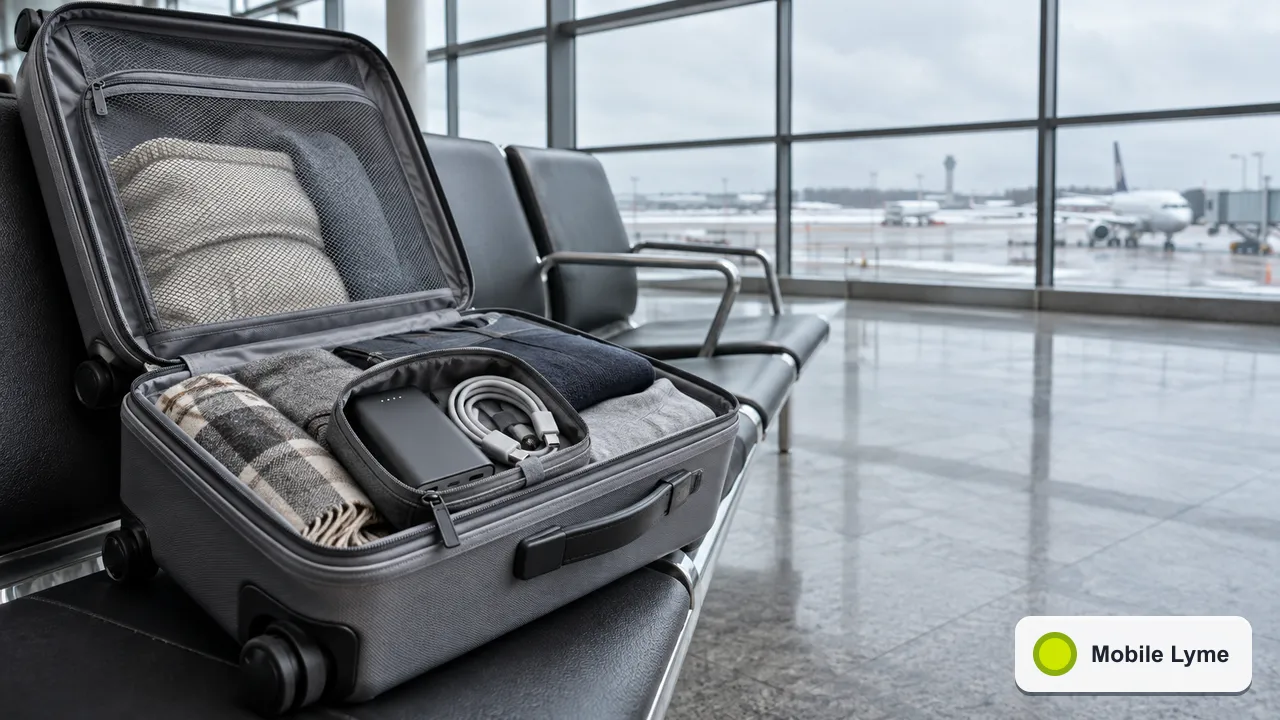
You can still take a power bank on a plane this Christmas, but only in your hand luggage, no more than two per person, and you should not expect to recharge it on board. Those limits come from international rules that took effect on 27 March 2026, which the UK Civil Aviation Authority has adopted, and individual airlines can be stricter still.
A phone that dies halfway through a delayed journey is a real nuisance when your boarding pass, rail tickets and taxi app all live on it. Power banks solve that, which is why so many of us pack one without thinking. The rules for carrying them have tightened over the past year, so here is what has changed and how to pack sensibly for winter flights.
The rules in one list
The CAA's summary of the March 2026 changes sets out the passenger rules for power banks. They:
- must be carried in carry-on baggage, never in the hold;
- must be individually protected when not in use;
- must not be recharged on board the aircraft;
- should not be used to charge other portable electronic devices on board;
- are limited to a maximum of two per person.
There is also a size limit. Lithium-ion power banks rated up to 100 watt-hours (Wh) are allowed without the airline's approval. Those above 100Wh and up to 160Wh need approval from the airline before you fly. Anything larger is not something to bring to the airport.
Working out the watt-hours
Most power banks are sold by milliamp-hours (mAh), which is not the figure airlines use. Look on the casing first: many carry a Wh rating printed in small type near the ports. If yours does not, you can work it out with a simple sum:
Wh = mAh × voltage ÷ 1,000
Power bank cells are usually rated at 3.6V or 3.7V. A 20,000mAh pack at 3.7V comes to 74Wh, comfortably under the 100Wh line. A 27,000mAh pack at 3.7V works out at just under 100Wh. Once you get above that, you are into the approval band, which is more hassle than most holiday travellers want. If the rating has worn off or was never printed, security staff may refuse an unmarked pack, so a clearly labelled one is the safer choice.
What "not recharged on board" means in practice
The rule is aimed at the power bank, not your phone. Plugging the pack into a seat-back USB socket or mains outlet to top it up is what the rules prohibit. The guidance that you should not use it to charge other devices on board is worded as "should not" rather than "must not", and airlines decide how to apply it. Some UK and international carriers have gone further in their own conditions of carriage, including rules about where you may stow a power bank in the cabin.
The practical answer is to treat the power bank as something you use in the terminal and on the ground at the other end, and to plan your phone charging around that:
- Charge your phone to full at home or in the departure lounge.
- Charge the power bank fully before you leave home, as you will not be able to top it up in the air.
- If the aircraft has a seat-back socket, it is fine to charge your phone from that directly, where the airline allows it.
- Switch on Low Power Mode or Battery Saver before take-off and download any boarding passes, tickets and maps so you are not relying on mobile data on arrival.
Why security may ask you to switch your phone on
This one catches people out on the way home. GOV.UK's hand luggage guidance says you should make sure your devices are charged before you travel, and that if a device does not switch on when requested, you will not be allowed to take it onto the aircraft. A flat phone at the security check is a real problem, which is another reason to keep a charged power bank in your bag for the airport.
Check the airline before you pack
The CAA rules are the baseline. Airlines can and do add their own restrictions, such as asking passengers to keep power banks in a seat pocket or under the seat rather than in an overhead locker, or limiting how many you may carry. These details change, so read your airline's "dangerous goods" or "restricted items" page in the week before you fly rather than relying on what applied last summer.
The same applies if you are connecting through another country. Rules set by the departure airport's regulator and by the airline operating each leg both apply, and the strictest one is the one that matters.
Choosing a travel power bank
If you are buying one for a trip, or as a Christmas present for someone who travels, a few features make life easier at the airport:
- A clear Wh rating printed on the casing.
- A capacity of around 10,000mAh to 20,000mAh, which covers one or two full phone charges for most handsets and stays well under the 100Wh limit.
- USB-C Power Delivery, so the same charger and cable work for your phone and the pack. Our guide to USB-C chargers explains the labels.
- A reputable brand with a UK address on the packaging, and a pack that does not bulge, rattle or get hot when charging.
Retire any power bank that has swollen, been dropped hard enough to dent the case or smells of chemicals. Lithium batteries that are damaged can overheat, which is exactly the risk the new rules are trying to reduce.
Looking after the battery on a long trip
Winter travel brings its own battery quirks. Phones lose charge faster in the cold of an unheated platform or a ski lift, and recover once they warm up again. Our piece on why phones die in cold weather explains what is happening. For everyday habits that keep a battery healthy over years, see our guide to battery health.
More from Mobile Lyme
- Smartphones
Using Your Phone in Europe This Winter: Roaming Charges and Settings
Check your network's European zone and fair-use limit, then change four settings before you fly.
- Smartphones
Setting Up a Child's First Smartphone for Christmas
Create their account, link it to yours and agree a few rules before the phone is wrapped.
- Phone Care
Scam Texts About Parcels and Payments: How to Spot and Report Them
Forward suspicious texts to 7726, use 159 for bank calls and check deliveries through the retailer.